Migration: Security measures on the Euros are strengthened following German decisions.
Greek government plans to deploy a strong force of border guards in the mountains area of Rodopi up to Komotini, patrols and roadblocks are being increased on the Egnatia Highway axis from Evros to Thessaloniki, while coast guards vessels will patrol off Alexandroupolis.
Stavros Trimas on the newspaper Kathimerini, 14.09.2024
Research Questions and Thesis
How do border sounds?
What are the unheard narratives of the local communities in Western Thrace?
On my artistic research Soundscapes of Western Thrace through the Politics of Listening I am trying to lend an ear to the inaudibilities of the people living in Western Thrace and their narratives on their land. It is an attempt to listen the silences and the whispers that can be found on the in-between space of this fragmented landscape of the borderland. An in-between space that is filled with voices and it is loud reaching the threshold of pain. Official and unofficial voices of two nationalisms, the greek and the Turkish one as well as vociferations of urgencies. Ecological and political urgencies.
Listening to these soundscapes it requires an active listening with time, the understanding of listening as witnessing and a focus on the politics of listening, but before I elaborate more on the listening aspect and its role in my research, it is important to give a brief outline of Western Thrace , its history and its importance.
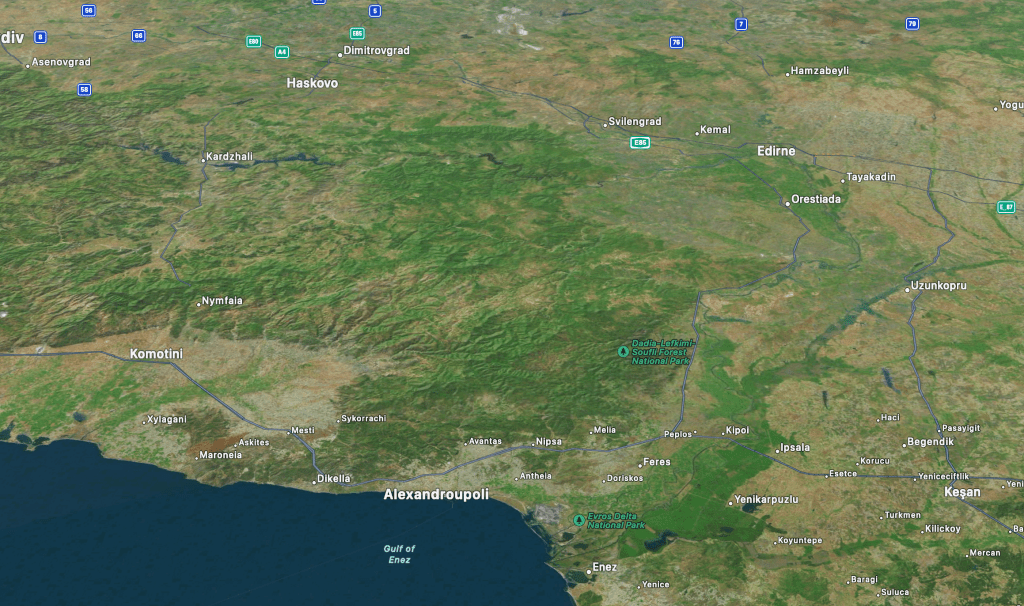
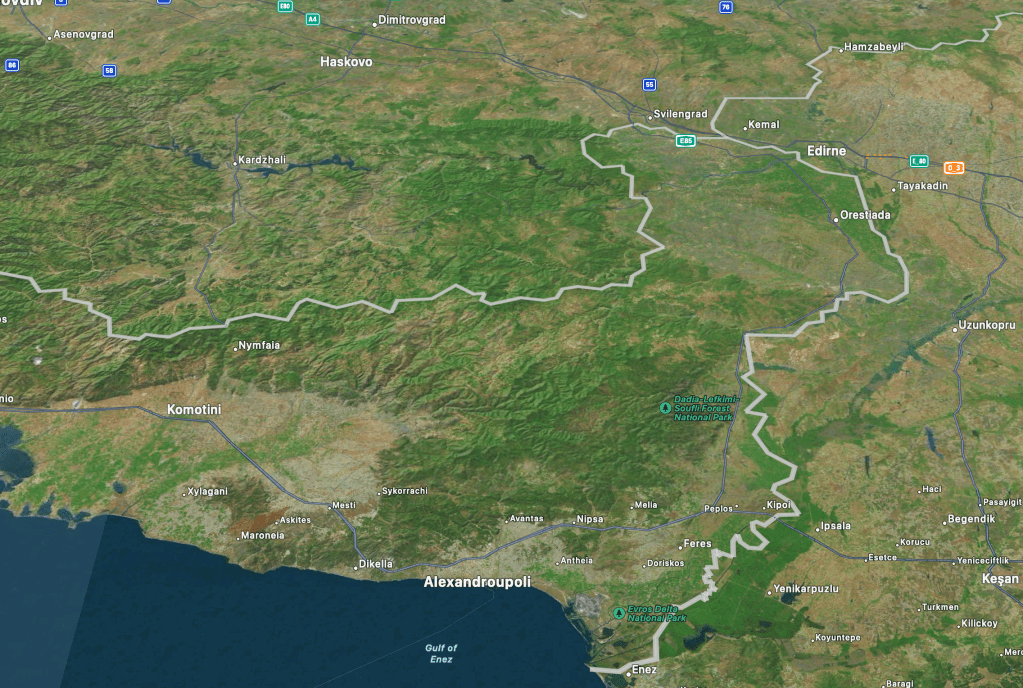
Western Thrace – A brief overview
In the north the mountains of Rhodope, in the south the sea of the Aegean, in the west the river of Nestos and in the East the river of Evros. In between these physical borders is Western Thrace, the most north east area of Greece. Or as it is being described by the official narratives of the greek state “Η ακριτική Θράκη” that can translate into “The frontier Thrace”.
The word “ακριτική” (akritiki) originates historically from the Akrites, the border guards of the Byzantine empire, stationed in remote, often challenging frontier regions to protect the empire from external threats. Therefore, when referring to Ακριτική Θράκη, the greek state in speeches, parades, tv radio and books emphasises that Thrace is the borderland region of Greece, in front of Bulgaria and Turkey and it is a crucial frontier for the centre.
The history of the area is complex through the centuries and there is an area that not a lot of listening to the other has happened.
In a few lines over the past century, Western Thrace has been a frontier zone and a melting pot of diverse cultures and minorities. After the Balkan Wars and World War I, it was transferred to Greece by the Treaty of Neuilly (1919). The region is home to a significant Muslim minority, composed of ethnic Turks, Pomaks, and Roma, who were granted protections under the 1923 Treaty of Lausanne and exempted from the population exchanges between Greece and Turkey. Throughout much of the 20th century, this minority faced various forms of discrimination, particularly during periods of tension between Greece and Turkey. However, relations began to improve after Greece’s entry into the European Union in 1981, with expanded civil and educational rights for the minority groups and economic development tied to European integration. Western Thrace’s location at the crossroads of Greece, Turkey, and Bulgaria made it a geopolitical hotspot, especially during the Cold War and in the post-communist era.
In recent years, the region has gained further prominence due to its role in the European refugee crisis. Positioned along one of the main migratory routes from Turkey into Europe, Western Thrace has become a critical transit zone for refugees fleeing conflicts in the Middle East and beyond. Greece, with EU support, has fortified its border in the region, turning it into a focal point for managing migration. The increased presence of refugee camps and security measures has added new layers of social and economic complexity to the region, which already has a historically significant minority population.
Theoretical background
Soundscapes are subjective constructs, shaped by the act of listening rather than just hearing. Barry Truax defines soundscapes as the relationship between humans and their sonic environments, emphasising that these are not neutral but are constructed through individual perception. Listening, as Jean-Luc Nancy notes, involves a search for meaning that may not be immediately accessible. He contrasts hearing, which is instantaneous, with listening, which can happen long after the initial sound through its resonance and connotations. Roland Barthes expands on this by describing listening as a psychological and decisive act, one that is shaped by cultural and spatial conditions rather than being a “natural” process. As artist Lawrence Abu Hamdam argues, listening is conditioned by the spaces and times that surround us, deeply influenced by political and social structures.
In my research in Western Thrace, I explore the politics of listening, particularly how soundscapes are perceived through the lens of these political structures. Western Thrace, a region with a complex mix of ethnic and cultural communities, provides a rich context for examining how different groups experience and interpret their sonic environments. The politics of listening in this setting requires a bottom-up approach, focusing on the micro-politics of everyday life and how individuals from different backgrounds engage with their surroundings. This involves questioning who listens, when, and how they do so, acknowledging the different roles listeners play in shaping their soundscapes.
A crucial aspect of this research is the concept of “listening with humility,” as proposed by Leah Bassel. For an artist or researcher, this means renouncing the authority to speak and instead adopting a listening role. It involves recognizing one’s own biases and the influence of dominant narratives, such as those imposed by the Greek state on minority communities. By doing so, the researcher can begin to understand the different soundscapes that emerge from communities with distinct cultural and educational practices. For instance, in my previous research in Ramallah, Palestine, I found that the sound of the Islamic call to prayer carried various meanings depending on the listener’s political or cultural background—whether it symbolized identity, territoriality, or a comforting presence. In Western Thrace, the same sound may have entirely different connotations depending on the listener’s perspective and the context of the acoustic territory, such as Muslim-majority villages like Iasmos or Ifaistos.
The idea of borders, both physical and social, is central to my exploration of soundscapes in Western Thrace. Borders in this context are not only the official, state-controlled boundaries but also the social and cultural divisions between communities. These “borders” are often experienced through sound, such as the shift in dominant languages from Greek to Turkish as one crosses into different neighbourhoods, or the territorial claims made by the church bells and mosque calls. Elena Biserna’s concept of the “soundborderscape” is relevant here, where borders are fluid spaces traversed by a plurality of sounds, bodies, and discourses. Recording in such spaces becomes a political act, as it involves choosing what to highlight and whose experiences to amplify.
Ultimately, the goal of this research is to challenge official narratives by recognizing and giving voice to the diverse sonic experiences of Western Thrace’s communities. By engaging with these contested soundscapes, we can create new narratives and, as Rancière suggests, “make a discourse where once there was only noise.”
Field Practice(s)
My field practice is based on field recordings of the sonic environment with acoustic microphones and experimental listening devices, listening walks, journalistic work, interviews and discussions with the live listeners as well as sound and musical experimentations with local musicians.
March 2024 – Listening walks and experimental music recordings
During my first field trip to Western Thrace in March 2024, my primary goal was to establish connections with local communities to better understand the region’s soundscapes. Recording was a secondary focus, with my microphone serving more as a personal log. My approach combined listening walks, journalistic research, and interactive dialogues with locals to uncover stories and experiences.
One key visit was to Ifaistos, a Roma Muslim community near Komotini, where I engaged with residents, including a teacher-musician who introduced me to the village’s music traditions. Later, I connected with Christos Chatzopoulos, a musician in Komotini, where we discussed his work blending Greek Orthodox and Muslim influences in music. With Christos Chatzopoulos we followed with a second recording session of local instruments in the landscape of Thrace in September 2024. Christos is one of the few musicians of the area that plays in ensembles together with musicians from the minority. In the yard of the old church of the village Evrenos I recorded him playing with a female young student of the minority who has left the area for studying in Turkey as the most of her generation.
I also visited Iasmos, a village with both Muslim and Greek-Christian communities, where I encountered tensions over the local soundscape, particularly the mosque’s call to prayer.
Additionally, I drove to the Delta Evros wetland near the Greece-Turkey border, where the presence of a newly built fence symbolised the political and social divisions in the region. During the trip I established some trustworthy contacts in order to be able to talk and listen with the Muslim Minority. A population close enough because of the years of oppression.
Recording 25th of March 2024, national parade in Komotini
September 2024 – Listening as witnessing and the importance of anonymity
In the second field research I travelled I focused on navigating Western Thrace together with a journalist and writer from the minority in order to be able to approach the minority.
“The minority will never say the truth on record, they will tell you what you want to hear depending on where you are coming from. Just listen and keep notes, that’s the way to go”
He said to me in September 2024 as we were driving from Komotini to an Alevi village in the mountains of Evros.
After a lot of days of talking and exchanging political views and understanding of the micro politics of the area he trusted me and he decided to bring me to “the minority of the minority” as he said.
These people as in other villages in the past until the beginning of 90’s were living with a lot of restrictions, not being able to leave their village without an ID and a permission by the greek military or to renovate their house. Nowadays they are in the process of recognition but they are facing extreme pressure from the Turkish state and the Turkish consultant.
They have had a fest for 700 years and their first presence in the area that now the Turkish state tried to undermine and claim for the rest of the minority, the Sunni one. At the same time the villagers are extremely worried about the refugee crisis and the undocumented immigrants crossing their fields.
The trip to this village was one of the most revealing of the soundscape of the area where the silence of the night was being contrasted by flying drones observing for fires, dogs barking in the smell of a foreigner and military trucks being almost the only ones on these country side streets.
We left the area to continue some kilometres away to the burned forest of Dadia. An extremely important biotope, refugee of birds and the centre of immigration routes.
Recording from the forest Dadia
Recording from the village of Alevi with the drone being present in the silent night
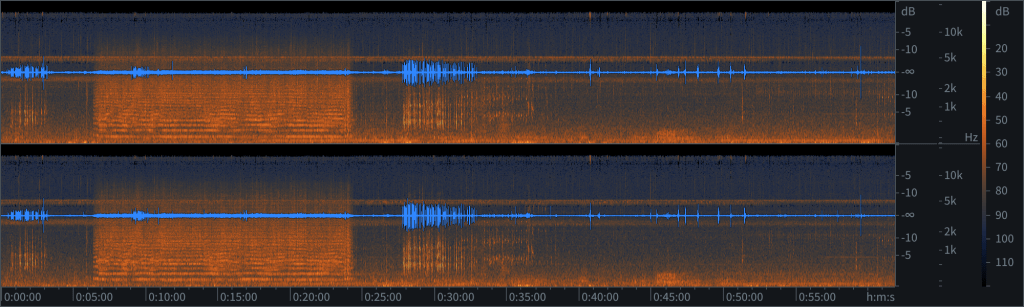
Recording from the wind in the fence of Evros
Recording from the wind being passed by a local instrument
Recording local musicians singing in Greek and Turkish together
Since the trip is quite recent I am still reflecting on these recordings and notes with the people there.
Last, I got the opportunity to find some of the only few literature of the minority that has been translated in greek.
The following poem by Rahmi Ali has been translated by me just for the purposes of this text. It has been published in Greek by the publishing house Tsoukatou for the fist time translated in Greek by Jannis Toptsoglou and originally written in Turkish.
Minority is
a traveler at the borders,
a field expropriated,
the faithful entering the mosque.Minority is
hearts full of joy,
eyes full of sorrow
in the mountainous supervised zone.Minority is
the half-ruined minaret,
the worker in Germany,
the bride gazing at the Aegean
from the side of Izmir,
my grandmother listening to the songs of Roumeli.Minority is
the laughter of unsuspecting Neslihan,
the tears of Emine who fears the future.
My love leaning on the mountains of Rhodope,
the warm Turkish words reaching from Istanbul.Minority is
a society without meaning,
worn down in the tobacco fields.
It is, my child,
a thought that grows on its own.Rahmi Ali
Outcomes and next steps of the artistic research
Participation in the symposium listening as witnessing
https://listeningbiennial.net/articles/listening-as-witnessing
Audio paper on listening to borders
The paper is in the process of peer review for the journal “Witnessing”.
Live sets based on the field recordings
I would like during the WiSe 24/25 to work on the sonic material of my first two field trips and work on live performances with the material to help me understand its sonic qualities.
Forest of Dadia – Acoustic research on the impact of the wildfires of 2023 and publication
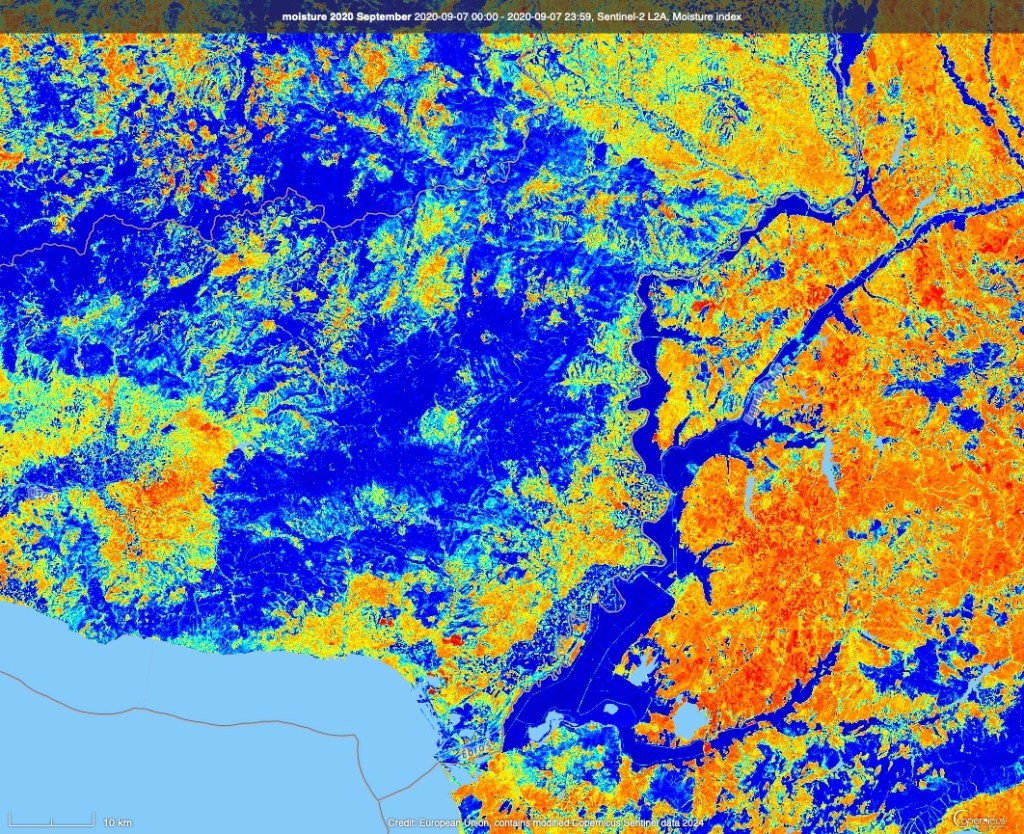
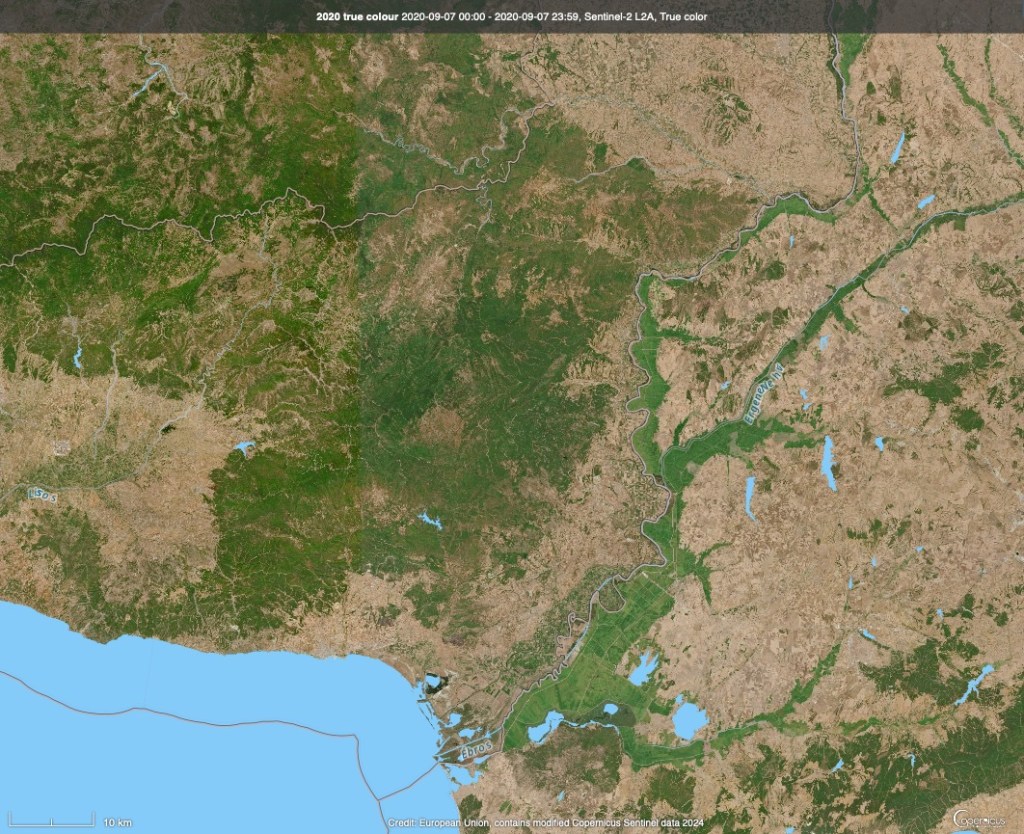
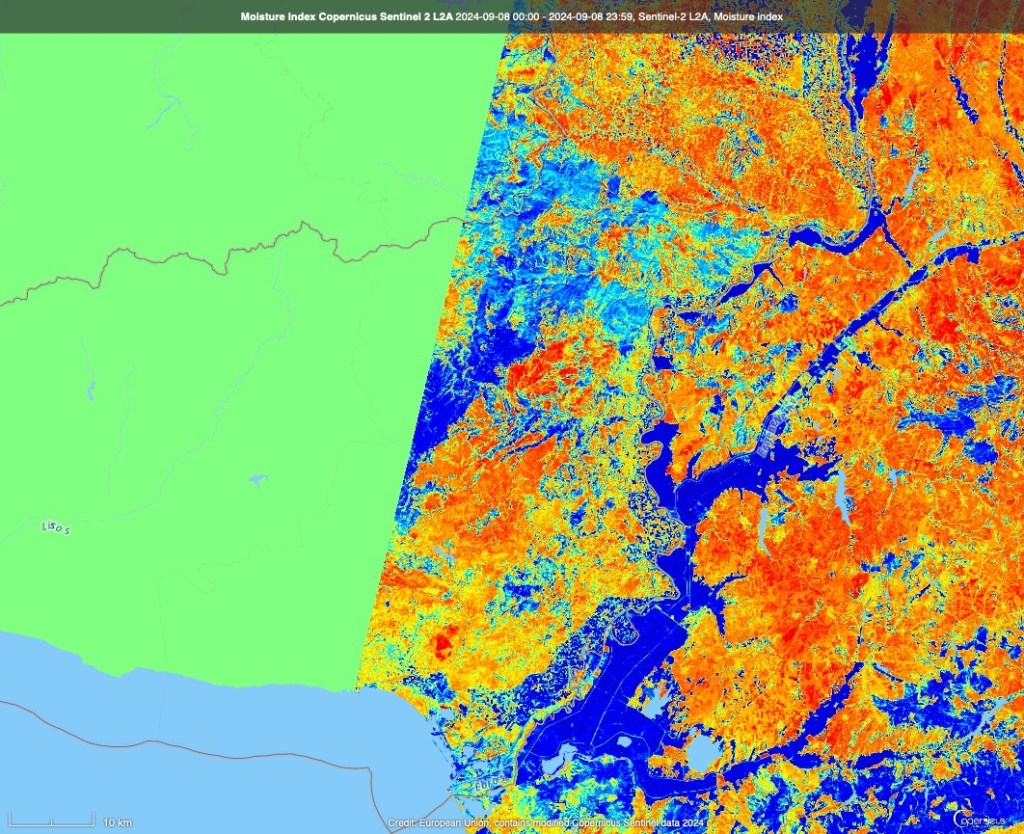
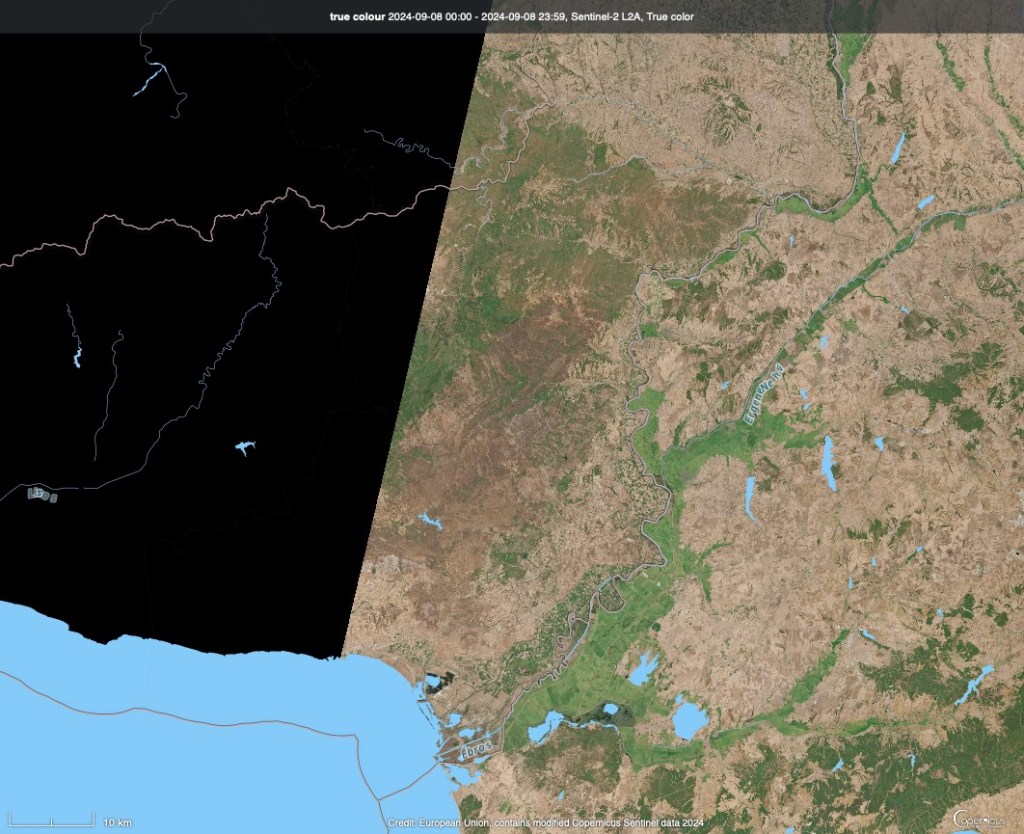
I am planning an investigative trip in the forest of Dadia that got burned in 2023, in the biggest wildfire in European Union ever on record. During my trip in September 2024 I visited a small village of the area together with my contact from the Muslim Minority. The village is mainly Christian and faces a to of challenges since the beginning of the refugee crisis.
There together with my co-traveller we heard a lot of witnesses about the connection of the soundscape of the burnt forest, the new immigration routes and the rising of the far right in the area. All the witnesses wanted to remain anonymous and they challenged/invited me to stay longer in the area to witness with my own ears the daily changes.
Dadia and the town Soufli next to it are difficult locations and for this I need to attempt a separate trip.
I am in discussion with Assist. Prof. Nikolaos Arvanitis of the Athens School Fine Arts for the preparation of this trip with. I am planning to attempt a second trip in the area together with an undergraduate students from the Athens School of Fine Arts with the support of the research project ERG Mute . Parallel I am investigating witnesses for people who live safely in Europe now and they crossed the area.
The outcome will be a publication outlining the soundscape of the area through anonymous witnesses accompanied with field recordings of the area that I did in March and September 2024 (e.g. Patrolling trucks, drones, silence night interrupted by the dogs, trying to amplify the microcosmos of complex border of Dadia)
Roussa and hill of Chilia – A fest between Greece and Turkey – An audio documentary
After my visit in September 2024, I got the contact with people from the Alevi minority that they organise a traditional fest in the hill of Chilia. Few kilometres outside of their village on the border with Bulgaria. The fest has been contested the last years by the Turkish consultant, by trying to establish their own or overtake this one. The village is recently supported by the greek state but until the beginning of 90’s they were leaving behind the so called military supervised zone, not being able to leave their village without official permission and IDs.
Since 2018 in the place it is running the only recognised and the oldest Tekes in Balkan. In the Alevi tradition of the area, in their religious ceremonies and in the fest the Saz was called as well as telawat al-Quran meaning the melodic recitation of the Quran which they find more important than the text itself, emphasising on their acoustic/music culture and its importance
Therefore its soundscape, the use of the Saz, the musicians, the official greetings but as well as the external people visiting can work as a sonic imprint of the soundscape and the political structures that are shaping. I am planning to go to the fest in the beginning of August 2025 and make an audio documentary about it, as it remains a story completely masked by all the other noises of the area.
Workshop with young musicians of the area on their soundscape
In the village of Evrenos, 30 km outside of Komotini I have worked with local musicians from the muslim and the Christian part of the population. These people expressed their will to learn more about recording and listening to their soundscape, so we talked about doing a small 2 days workshop during the winter of 2024/2025.
A workshop like that will make the process of my research more as a mutual exchange and will enforce the interdepence. Additionally, it will help me understanding better the way of perceiving their soundscape through their own recordings.
Multimedia installation in the form of Diorama including the previous completed works and a soundscape composition
The end of the artistic research should have the outcome of a multimedia installation where the individual works and live sets of the different territories and their soundscapes will be mixed together in a sonic diorama contesting the official “soundscapes” of Western Thrace. The design of the installation it is still in process.
Indicative literature
Aarbakke, Vemund. “THE MUSLIM MINORITY OF GREEK THRACE,” n.d., 938.
Back, Les. The Art of Listening. London: Berg, 2007.
Barthes, R. The Responsibility of Forms: Critical Essays on Music, Art, and Representation. Hill and
Wang, 1985.
Bassel, Leah. The Politics of Listening. London: Palgrave Macmillan UK, 2017.
https://doi.org/10.1057/978-1-137-53167-4.
Biserna, Elena. “SoundBorderscapes Lending a Critical Ear to the Border,” n.d., 11.
Bull, Michael, and Marcel Cobussen, eds. The Bloomsbury Handbook of Sonic Methodologies.
New York City: Bloomsbury Academic, 2020.
Inalcik, Halil, and Donald Quataert. An Economic and Social History of the Ottoman Empire, Vol.
1, 1300-1600. 1 vols. Cambridge University Press, 1995.
Järviluoma, Helmi. “The Art and Science of Sensory Memory Walking.” Edited by Barry Truax,
Marcel Cobussen, and Vicent Meelberg. The Routledge Companion to Sounding Art, n.d.,
15.
Kandler, Hermann. “Greek Thrace- a Region Populated by Christians and Muslims in the European
Mediterranean.” Europa Regional : Zeitschrift Des Leibniz-Instituts Für Länderkunde 15,
no. 2 (2007): 75–86.
Kane, Brian. Sound Unseen: Acousmatic Sound in Theory and Practice. Oxford University Press,
Krysalis, Eleftherios. “Politics Of Listening, Soundscapes from Ramallah, Palestine.” Bauhaus-
Universität Weimar, 2020.
LaBelle, Brandon. Acoustic Territories: Sound Culture and Everyday Life. New York: Continuum,
2010.
Massey, Doreen. For Space. London: SAGE, 2005.
Mezzadra, Sandro, and Brett Neilson. Border as Method, or, the Multiplication of Labor. Duke
University Press, 2013. https://doi.org/10.1215/9780822377542.
Nancy, Jean-Luc, and Charlotte Mandell. Listening. 1st ed. New York: Fordham University Press,
2007.
Rancière, Jacques. Disagreement: Politics and Philosophy. Minneapolis: University of Minnesota
Press, 1999.
Schafer, R Murray. “The New Soundscape: A Handbook for the Modern Music Teacher,” n.d., 36.
Sgatzos, Aristidis. “Μαθαίνοντας Τα Σύνορα: Η Κατασκευή Της Μειονοτικότητας Σε Ένα
Μειονοτικό Σχολείο Της Κομοτηνής [Learning the Borders: The Construction of Minority
in a Minority School of Komotini].” University of Aegean, 2005.
Steintrager, James A., and Rey Chow, eds. Sound Objects. Durham: Duke University Press, 2019.
Truax, Barry. “Handbook for Acoustic Ecology.” Accessed October 11, 2021.
http://www.sfu.ca/sonic-studio-webdav/handbook/Soundscape.html.
Yuval-Davis, Nira, Georgie Wemyss, and Kathryn Cassidy. Bordering. Cambridge, UK ; Medford,
MA: Polity, 2019.
Playlist of field recordings for the presentation (I am putting the sounds here because of BBB functionality for sharing audio)
Night Dereio
Drone Dereio
Birds Observatory Dadia DPA
Birds Observatory Dadia Neumann
Iasmos Pray and Bells
Evrinos Greek Turkish
Evrinos Saz
Evrinos Orphic Lyra
Komotini parade
Delta Evros
Farmer Evros
 eleftherioskrysalis.info
Leave a comment